The Evolution of Storm Gods
From Sumeria to Rome
The history of storm gods across the ancient Near East and Mediterranean weaves a tapestry of divine power, cultural exchange, and human awe at nature’s fury. Following a catastrophic flood around 2900 BCE—possibly the historical spark for Sumerian deluge myths—these deities emerged, radiating from Mesopotamia eastward to Anatolia and westward through Crete and Greece to Rome. This narrative traces their development, anchoring the Israelite god Yahweh to Abraham’s origins in Ur, revealing a shared legacy of tempestuous divinity.
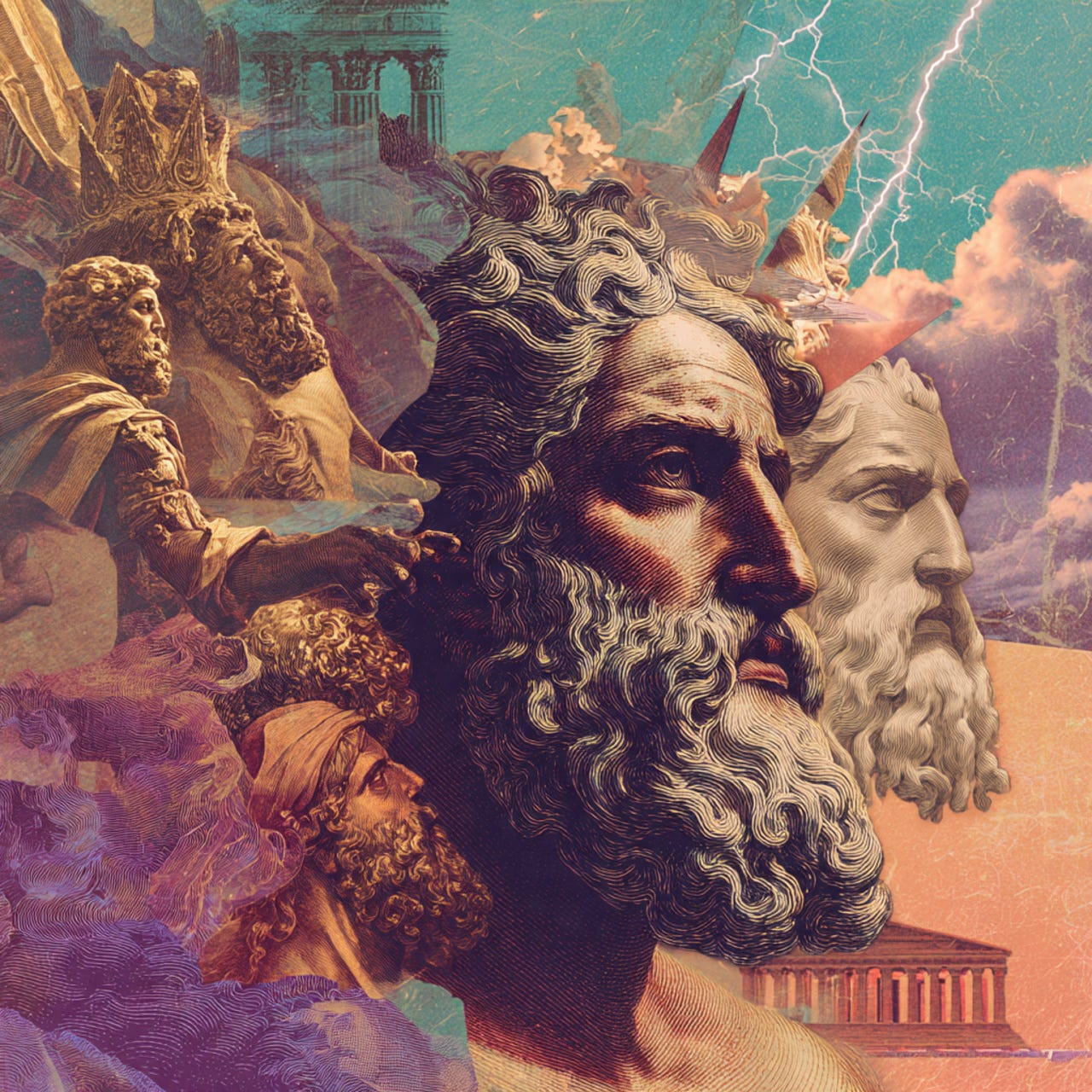
Sumerian Beginnings: Enlil and the Post-Flood Cosmos (c. 2900–2500 BCE)
After the 2900 BCE flood, which may have submerged Sumerian lowlands and inspired tales like the Epic of Ziusudra, Enlil rose as a cosmic arbiter in Sumerian theology. Known as “Lord Wind,” Enlil ruled from Nippur, wielding storms to enforce divine order. His dominion over wind and thunder reflected the flood’s duality—destruction yielding to renewal—as Sumerian cities like Ur rebuilt. By 2800 BCE, Enlil’s storm role began to share space with Iškur (later Adad), a more focused weather deity, foreshadowing a shift as Akkadian influence grew.
Eastward Expansion: Adad and the Semitic Storm Lords (c. 2500–1800 BCE)
The Akkadian Empire (2334–2154 BCE) carried Sumerian storm traditions eastward, elevating Adad as the Semitic storm god. In Babylon and Assyria, Adad’s thunderbolts ensured fertility, his bull iconography spreading to Syria by 2000 BCE. Among the Amorites, he became Hadad, a name resonant in the Levant. In Ur, where Abraham emerged (c. 2000–1800 BCE), Adad’s cult thrived alongside Enlil’s, likely shaping Abraham’s early worldview before his migration to Canaan, a seed for Yahweh’s later storm imagery.
Anatolian and Hurrian Innovations: Tarḫunna and Teshub (c. 2000–1400 BCE)
In Anatolia, the Hittites adopted Tarḫunna after 2000 BCE, a storm god of thunder and war, his axe and triple lightning marking royal power by 1650 BCE. Further east, the Hurrians’ Teshub, ascendant in Mitanni (c. 1500–1300 BCE), battled chaos figures like Ullikummi, blending Mesopotamian and local motifs. These eastern storm gods, tied to fertility and martial might, highlight a regional adaptation of the Sumerian archetype.
Minoan Interlude: Storm Gods on the Threshold of Greece (c. 2000–1400 BCE)
Across the Aegean, the Minoans of Crete (c. 2700–1450 BCE) bridged Near Eastern and Greek traditions. While their pantheon remains enigmatic—lacking deciphered texts beyond Linear A—artifacts suggest a storm god’s presence. Frescoes from Knossos (c. 1600 BCE) depict bull imagery, a common storm deity symbol, and peak sanctuaries on Mount Juktas imply weather-related worship. Minoan trade with Egypt and the Levant, where Hadad and Teshub held sway, likely imported storm god concepts. After the Mycenaeans absorbed Crete (c. 1450 BCE), this influence fed into Zeus’s early form, Di-we, evidenced in Linear B tablets (c. 1400 BCE). The Minoans thus channeled Near Eastern storm motifs westward, priming Greece for Zeus’s rise.
Canaanite Crossroads: Baal and the Abrahamic Connection (c. 1800–1000 BCE)
In Canaan, where Abraham settled, Hadad reigned as Baal, “lord” of storms. Ugaritic texts (c. 1400–1200 BCE) depict Baal vanquishing Yam and Mot with lightning, his cult atop Mount Zaphon a rival to emerging Israelite faith. Abraham’s Mesopotamian roots—steeped in Enlil and Adad—met Baal’s dominance, subtly influencing Yahweh’s storm traits (e.g., Exodus 19’s thunderous Sinai). Baal’s legacy thus links Sumeria to Israel’s monotheism.
Yahweh’s Storm Legacy: From Ur to Israel (c. 1200–500 BCE)
Yahweh, emerging in the south (Judges 5:4), absorbed storm motifs in Canaan. His Sinai theophany (Exodus 19) and Psalm 29’s thunder echo Baal, yet root back to Abraham’s Ur, where Enlil and Adad roared. By 587 BCE, Yahweh’s monotheistic storm identity—forged from Mesopotamian and Canaanite threads—stood distinct, a testament to cultural synthesis.
Westward to Greece and Rome: Zeus and Jupiter (c. 1200–500 BCE)
In Mycenaean Greece (c. 1600–1200 BCE), Zeus emerged as Di-we, a sky god tied to storms, inheriting Minoan and Near Eastern echoes. Post-Dark Ages (c. 1200–800 BCE), Homer’s Zeus (c. 1200 BCE composition, written c. 800 BCE) wielded thunderbolts against Typhon, a narrative kin to Teshub’s battles. Rome, by 500 BCE, recast Zeus as Jupiter, the “Thunderer,” his Capitoline cult blending Greek and Italic traditions. This westward arc—from Sumeria via Crete—culminates in Rome’s imperial storm lord.
Conclusion: A Tempestuous Tapestry
From Enlil’s Sumerian reign post-2900 BCE, storm gods fanned out: Adad to the Semites, Tarḫunna and Teshub eastward, Baal in Canaan, and via the Minoans to Zeus and Jupiter westward. Abraham’s Ur anchors Yahweh within this storm legacy, blending Mesopotamian origins with Canaanite adaptations. The Minoans, as a pivotal link, underscore how trade and conquest wove these deities into a shared narrative of divine power over the elements.